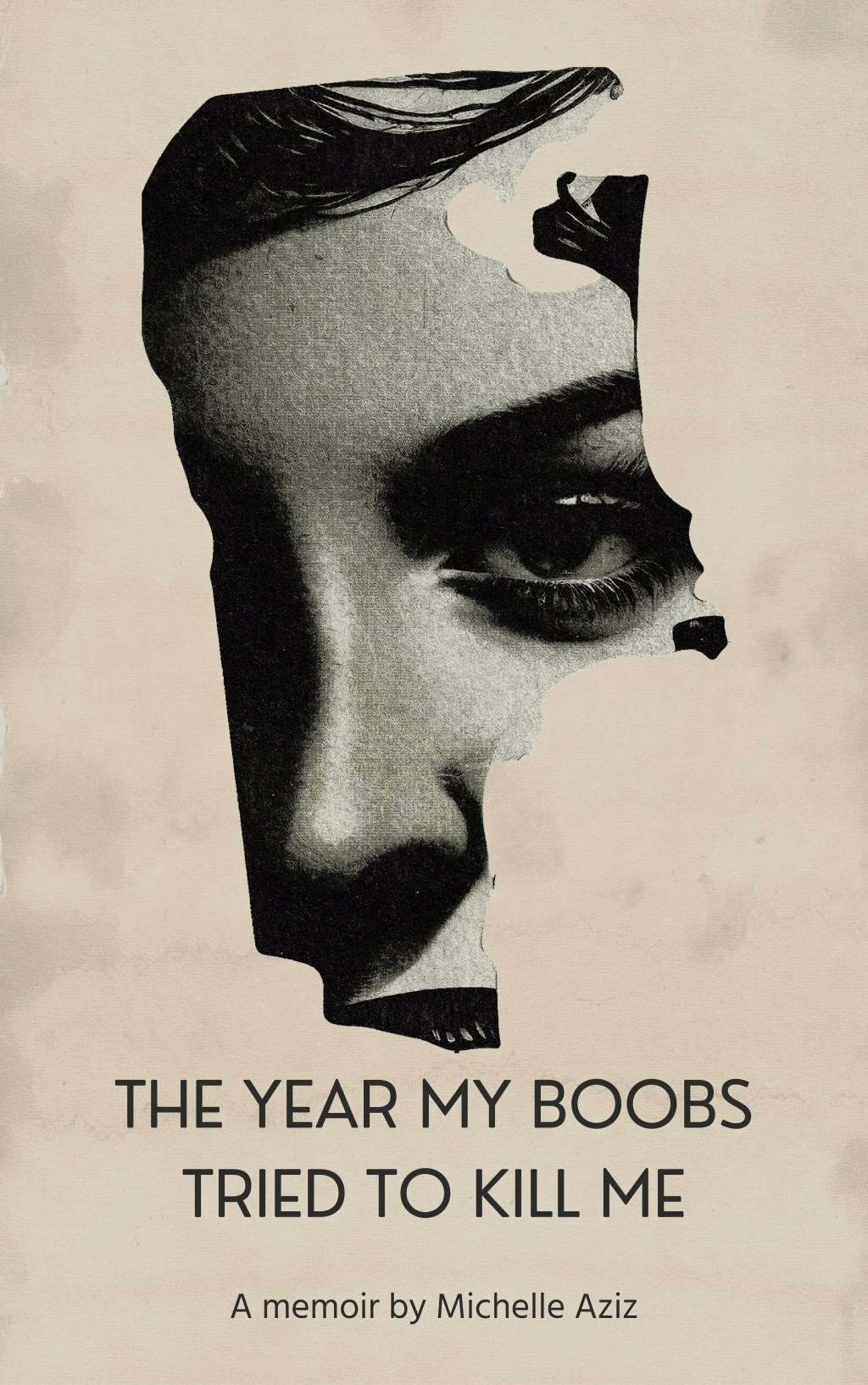
Between Storm and Silence: A Liminal Space of Not-Knowing
The storm came on Christmas Day, as though the sky had decided to join in the chaos that was already brewing inside me. A tornado ripped through the Gold Coast, tearing down powerlines, trees, and any illusions of stability we had left that summer. It was hot – forty degrees at least. The air was heavy, suffocating, as though the storm had sucked away all oxygen and left behind a world made of static and heat.
Somewhere in the middle of that surreal Christmas, with winds howling outside and the house shuddering under the weight of the storm, I felt it. A lump. Just there on my chest, hard and undeniable beneath my fingertips. My heart dropped, but I didn’t say a word. Not to my husband, not to anyone. It was like suddenly standing at the edge of a cliff and realising that no matter how tightly you hold your breath, gravity will eventually take you down.
The next day the electricity was gone. No air conditioning, no traffic lights, no shops open. The world outside was a wasteland of broken branches and melted bitumen. The heat pressed down on us relentlessly, the kind that seeps into your bones and makes tempers flare. By mid-morning we made the decision to leave. We packed hurriedly, throwing clothes and toiletries into bags, and fled to the city like refugees of some strange new apocalypse.
We checked into a hotel, grateful for its air conditioning and running water. For the first time in days, I could breathe. But I wasn’t just escaping the storm or the heat. I was buying myself time. Space. What I had stumbled into was a liminal space, though I didn’t have the words for it then. A threshold between the world I had known – the safe, ordinary world where Christmas meant family and laughter and routine – and the dark, uncertain one that was waiting for me.
I didn’t tell anyone about the lump. I wanted to be alone with it, to cradle the fear silently like a secret pet I wasn’t ready to show to the world. It wasn’t denial. It wasn’t ignorance. It was knowing. A deep, primal knowing. My body had already whispered the truth: this is cancer. I just wasn’t ready to let the words escape into the open, where they could never be taken back.
So we stayed in the city for a week. We ate out, we walked streets that still hummed with power, we tried to pretend we were on a holiday. But beneath it all, I was carrying this knowledge. This weight. At night, when my family slept, I lay awake staring at the ceiling, fingers pressed to my chest, waiting for answers that hadn’t yet come.
When the electricity was finally restored to the Gold Coast, we returned home. There was relief in unpacking, in hanging clothes back in the wardrobe, in the comfort of returning to routine. But the illusion of stability didn’t last. We had barely finished unpacking our suitcases when a loud crash erupted outside. We ran out, startled, and found our car smashed against the footpath. Our neighbour, in some tragic twist of irony, had accidentally reversed straight into it.
It felt like a cosmic joke. First the storm, then the lump, now this. Our car was undriveable, leaving us stranded. We spent the next week trudging from car yard to car yard in the thick of the hottest summer in years. Sweat clung to our skin, tempers frayed, and still, always, there was the lump. My private shadow, reminding me that the real disaster was yet to come.
We finally bought a new car, and once the dust settled, I could no longer hide from what I knew I had to do. I made an appointment with my GP.
Sitting in the sterile room, she examined me with careful fingers. “It’s probably nothing,” she said. “Maybe just a cyst. But let’s book an ultrasound and mammogram to be sure.” Her tone was calm, reassuring, as though she were reading from a script designed to soften any blow. I wanted desperately to believe her. But I couldn’t.
Because of the Christmas power outage and the backlog it caused, there was a three-week wait for the scans. Three weeks. Time stretched unbearably, like being held hostage in a waiting room with no exit. I forced myself not to think about it, not to obsess. I buried myself in work, in errands, in anything that might distract me from the gnawing dread. But underneath it all was the certainty. My body knew. My heart knew. This wasn’t going to be nothing.
When the day of the scans finally came, I lay on the cold table under the harsh lights, staring at the ceiling tiles while technicians moved silently around me. I studied their faces desperately, searching for clues in their expressions, but they were impossible to read. Trained into neutrality, into silence. Every smile felt like a mask, every frown a sign I wasn’t meant to see.
The next day I went back to the GP for the results. I didn’t tell anyone where I was going. Not my husband, not my family. I slipped away quietly during my lunch break as though it were an ordinary errand – paying a bill, picking up groceries. Hope flickered inside me, fragile and impossible, but deep down the truth was already lodged like a stone in my chest.
The moment I saw her face, I knew. My GP didn’t even need to speak. She simply handed me the radiologist’s report. The words were stark, clinical, merciless: multifocal tumour. 90% probability of malignancy.
And just like that, the floor dropped out from under me.
I felt nothing. No tears, no screams, no dramatic collapse. Just a strange, eerie numbness. I thanked her – out of habit, out of politeness, I’m not sure – and walked out as though nothing had happened. As though I hadn’t just been told that my life was about to unravel.
I drove home in silence. The world outside looked exactly the same – cars on the road, people at bus stops, sunlight on the pavement – but I was no longer the same. I had crossed the threshold. The liminal space I had occupied since Christmas was gone, and I had entered a new world. One where nothing would ever be ordinary again.


 healing through words
Leave a comment