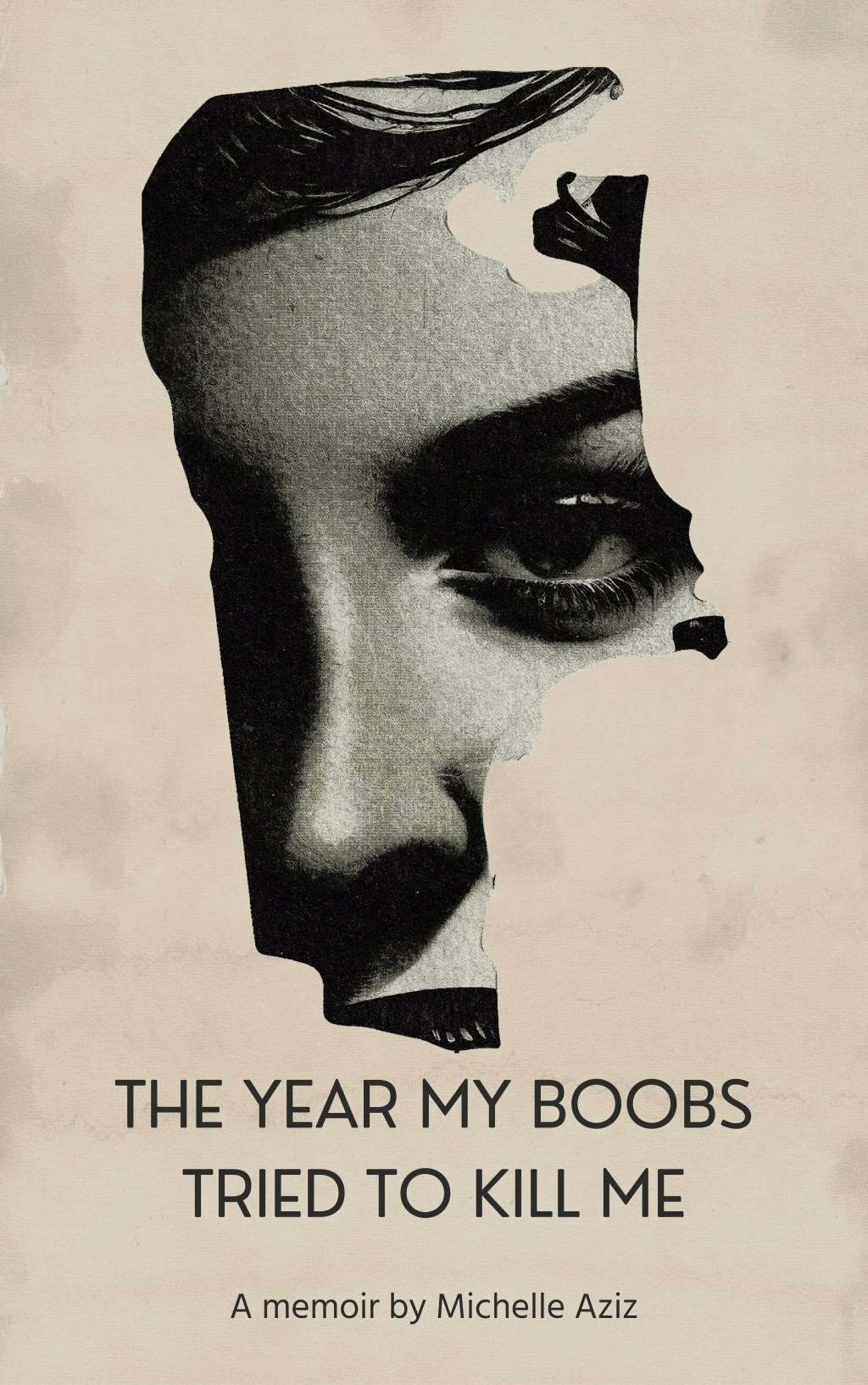
It was the beginning of March, three months since the day the ground split open beneath us with the words “triple negative breast cancer.” That diagnosis had carved out a before and after in my life. And this was the day the “after” was about to take shape in detail: the day I would learn my chemotherapy treatment plan.
My husband and I woke early, long before the alarm. The house was still, but inside our little cocoon of a bedroom the air was charged. Anticipation, fear, anger, dread -they all buzzed together in a restless swarm that refused to settle. And yet, there was another current running through it all: the strange sense that we were finally stepping into fight mode. For months we had been suspended, waiting, me in deliberate ignorance, him buried deep in late-night internet searches that left his eyes red and weary. This day, circled on the calendar, had been our destination.
He was ready with a notebook and pen, rehearsing questions in his head. He would be the one to remember the drug names, the dosages, the timelines. He would ask about side effects, long-term impacts, survival statistics. I, on the other hand, could barely breathe under the weight of it all. My job was not to collapse. My job was to hold myself upright, to absorb what I could without shattering.
We left early, thinking we had plenty of time. But as soon as we reached the hospital, reality intruded in its most ordinary, frustrating form: every carpark was full. Not just full – overflowing. Cars jammed the streets for blocks, their owners already inside with their appointments, their emergencies, their crises. Time ticked on, and every minute that passed was a tightening noose.
My appointment was minutes away when the realisation hit me: my husband wasn’t going to make it inside with me. A lump rose in my throat, hot and stinging. After three months of waiting, of clinging to the idea that at least we’d face this first appointment together, I was about to walk in alone. He pulled up at the hospital entrance, tears swimming in his eyes, jaw clenched with helplessness. “I’ll find a park. I’ll come in. I’ll get there,” he promised. I nodded, forcing a smile, but something inside me already knew.
I kissed him quickly and stepped out of the car, the sliding doors of the hospital swallowing me whole.
By the time my phone buzzed, I was already seated in the waiting room, knees bouncing. His voice came down the line thick with tears and frustration. “I’m at a petrol station. Two suburbs away. There’s nothing. I can’t get to you.” I could picture him gripping the steering wheel, fighting himself as much as the traffic. He wanted to be my anchor, and here he was stranded. I wanted to soothe him, but I was already pulling up walls around myself. “It’s okay,” I lied. “I’ve got this.”
When my name was called, my stomach dropped. I stood, inhaled deeply, and crossed the threshold into the oncologist’s office.
She was a kind woman, softly spoken, but her eyes and manner carried the brisk efficiency of someone who deals daily in life and death. There was no hesitation, no small talk. She opened her folder and began. Names of chemotherapy drugs, cycles, schedules, side effects, treatment timelines – it all blurred into a rapid-fire lecture. Words like “immunotherapy” and “adjuvant” skimmed past me without landing. I nodded, though I was drowning. I had imagined this moment as one of clarity, a structured roadmap to cling to. Instead, it was a storm.
When the nurse joined us, the tone shifted. She leaned in, speaking about softer, more human things: how I would tell my son, how we would manage financially, who would help with school drop-offs, whether I would work or take leave. Practicalities, logistics, scaffolding for the months ahead. Her voice was kind, but it only reminded me how many moving pieces my life contained and how fragile they now felt.
Three hours passed in that small office, though it felt both endless and instant. I emerged with my arms full: pamphlets, booklets, a diary titled The Gift of Cancer – a title I wasn’t ready to stomach. I was also handed a slip for blood tests, a task that felt monumental in my weakened, unsteady state. I hadn’t eaten. I hadn’t drunk water. My body trembled with exhaustion and adrenaline. But I forced myself down to pathology, steeled myself against the panic rising in my chest, and rolled up my sleeve.
Afterwards I called my parents, who had been waiting nearby. My husband was still lost in traffic and frustration, so it was my mum and dad who picked me up and ferried me to the next ordeal: the clinic where a marker clip would be inserted into the tumour.
By then the day felt less like a medical process and more like a cruel endurance test. Each step was more difficult, more terrifying. And through it all, I realised a brutal truth: even surrounded by love and support, I was the one who had to walk into each room, lie on each table, face each needle. This was my body, my battle. No one could stand in for me.
At the clinic, I told my parents to wait in the car. I couldn’t bear to drag them through another sterile waiting room. I caught the elevator alone, the chill of the white, humming space settling into my bones. My name was called almost immediately. No time to panic. Autopilot switched on.
Shirt off. Bra off. Onto the narrow, steel table. The nurse murmured assurances, “you’re doing great, you’ll be fine.” The doctor appeared, brisk and calm. Local anaesthetic first. A sting. Then another. “Tell me if you need more.” Another sharp burn, then numbness spreading. My mind floated somewhere above me, detached.
And then it was over. Quicker than I had expected, though the dread had stretched time beforehand. Carefully, I lifted myself from the table, clutching my gown around me, and shuffled into the adjoining room.
The mammogram machine loomed. I pressed myself against its cold plates, obedient, while the giant screen lit up. There it was: my tumour, unmistakable, ugly. And there, floating inside it now, was a tiny piece of metal. My marker clip.
The doctor explained it in simple terms. The clip was like a beacon, a small metallic breadcrumb left behind to mark the site of the tumour. Chemotherapy’s job was to shrink, and hopefully obliterate, the tumour. If the drugs succeeded and the mass melted away, the clip would remain. It would be the surgeon’s map, showing exactly where the cancer had once rooted itself. Without it, surgery would be like searching blind. With it, even if the tumour disappeared completely, there would still be a clear target to remove. A reminder. A guide.
I stared at the screen, watching the little speck hover in the middle of the grey blur. Something about its presence steadied me. Here was proof of my enemy, marked and tracked. It wasn’t invisible anymore.
But as I walked out of that clinic, breasts sore, body drained, I also felt the sharp sting of loneliness. This was the shape of my new life: one medical hurdle after another, endured largely on my own. Yes, my family and friends were there, holding me up at the edges, but inside the fluorescent-lit rooms, stripped down, vulnerable, it was always me.
By the time I reached my parents’ car, the day had hollowed me out. I slid into the back seat, pamphlets spilling across my lap, my arms wrapped tight around myself. I wanted to cry, to scream, to curl up, but instead I sat quietly, staring out the window. The sun was still shining, cars still flowing through the streets, people still laughing in cafés as if the world hadn’t shifted.
For them, it was just another day. For me, it was the day the battle lines had been drawn.


 healing through words
Leave a comment