13 March 2024
I didn’t sleep the night before.
The portacath insertion had left me dazed, the double dose of fentanyl still swirling in my veins, my body heavy but my mind jittery and restless. My head spun in uneven circles, as though I were still lying on the operating table with the fluorescent lights glaring down at me. No matter how I tried to anchor myself – closing my eyes, listening to the house creak, pulling the blankets tighter – I couldn’t get my bearings. It was like my mind and body were playing two different games, and neither of them included sleep.
I knew what was coming. Tomorrow wasn’t just another day; it was the day. My first chemotherapy session. The beginning of a whole new reality I hadn’t wanted but had no choice but to step into.
I told myself not to think too far ahead, not to imagine the cycles, the cumulative fatigue, the nausea, the baldness that would eventually come. I tried to press it all away. But as the night hours stretched on and the black sky began to lighten at the edges, I realised I had spent the entire night watching time pass, waiting for the sun to arrive, waiting for the day I had been dreading since diagnosis. The clock ticked its way towards morning. 8:30 a.m. was my appointment. First slot of the day. No room for hesitation, no excuses.
My husband and son had both taken the day off to drive me to the hospital, but I had told my family and friends that I was going to do the chemotherapy sessions on my own. I didn’t want them to see me stripped back, vulnerable, bare in ways that went deeper than skin. I didn’t want them sitting in those chairs, watching me hooked up to the chemicals that would fight for my life.
This was mine to carry. My thing to get through. I wanted to protect them, as much as I could.
Walking into C Ward, I felt as if I were floating, still slightly drugged from the fentanyl haze, still unsteady from the lack of food and sleep. The waiting room was quiet, but I had barely lowered myself into a chair when my name was called. No ceremony, no delay. Just straight in. Through the doors, into the chemo ward.
I was led into one of the pods, where a big reclining chair sat waiting, oversized and almost welcoming, like it was ready to cradle me through the long hours ahead. I had come prepared, perhaps over-prepared: a bag packed as though I were leaving for a holiday. Tissues, wet wipes, water bottles, snacks I didn’t feel like eating, a cardigan for the inevitable chill, books, pens, notebooks – anything I thought might distract me or comfort me. I had been told the first session could take up to five hours, so I packed for survival.
Settling into the chair, I felt the activity start around me almost immediately. Nurses on either side – efficient, kind, all business. They took my pulse, my blood pressure, my temperature, studied my chart. They explained the order of things: pre-meds first, then the drugs themselves, layer by layer.
When they handed me a large capsule to swallow, I panicked. It looked impossibly big, like something designed for a horse, not a human. “I can’t,” I whispered, the fear rising up like bile. My throat tightened.
The nurse looked at me, steady and patient, and cracked the capsule open. Inside were six smaller pills. Relief flooded me. Six small ones I could handle. I swallowed them one by one, sipping water like it was the most precious thing in the world.
My heart raced through the whole ordeal. Tachycardic, the nurses noted. “Is it always like this?” one of them asked gently.
“Only on the days I start chemo for the first time,” I replied, trying to smile. Trying to make light of the terror that was burning me from the inside out.
They turned their attention to the port in my chest. Inserted just the day before, it was still red and raw, the skin angry and swollen. One look and the nurses shook their heads. No way could this be used today.
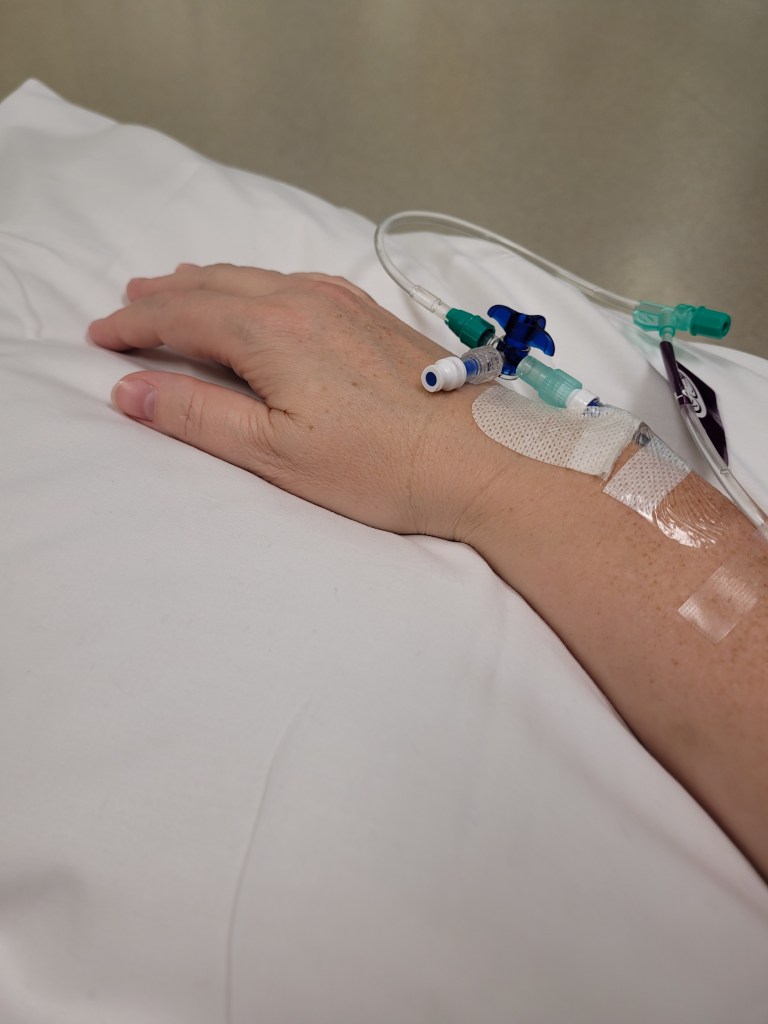
I felt strangely relieved, almost vindicated – like my body had bought me one small reprieve. Instead, they decided to use a cannula. It slipped into my vein without fuss, a quick sting and then it was done. I braced myself for the worst, but there was no drama. No allergic reaction, no sudden waves of nausea. Just a steady drip as the clear cocktail began its journey into my bloodstream.
Pembrolizumab. Paclitaxel. Carboplatin. Words that sounded like weapons, sharp and foreign. My treatment plan was mapped out before me: week one, the full cocktail over three and a half hours. Weeks two and three, just paclitaxel. Then repeat. Twenty-one days at a time, four full cycles. A rhythm I would come to live by.
The nurses stayed with me, a steady presence. They explained what lay ahead: the concept of good days and bad days, the way chemo works in cycles, how side effects don’t necessarily appear all at once but build and compound with each round.
They warned me about food safety, about avoiding germs, about the danger of even a small fever. If your temperature rises above 37 degrees, go straight to emergency. They repeated it, made sure I understood. They handed me a special card for my wallet, proof of my status, a golden ticket for urgent care. If anything went wrong, I was not to wait in a line or sit in a waiting room. Cancer patients had to be treated immediately.
It all felt solemn, almost ceremonial. Like I had been initiated into a secret society I had never wanted to join. But at the same time, I felt held. Protected. For the first time since diagnosis, I wasn’t just waiting or guessing. I was doing. I was in fight mode. The switch in my brain flicked over, and I surrendered. Relinquished control. Trusted the process.
The hours passed. To my surprise, quietly. No sudden waves of dread. No violent reactions. Just me, in the chair, watching the drip-drip-drip of the medicine that was both poison and cure. When the final flush of saline went through the cannula, I felt almost startled. Was it done already? Had I really just had chemotherapy? The nurses removed the line, taped me up, and told me I could go home. I stood carefully, unsteady but intact.
The sun hit me as I walked out of the ward, golden and forgiving. I sat outside, waiting for my husband and son to pick me up. I scanned my body, checking for tremors, for nausea, for weakness. But what I found instead surprised me: I was hungry. Ravenous.
I hadn’t eaten properly in two days, but now the hunger came roaring back. I went back inside and raided the hospital kiosk for whatever snacks I could grab. Crisps, chocolate, nuts – nothing fancy, just fuel. It felt almost rebellious, stuffing food into my mouth so soon after chemo, like I was daring my body to object. But it didn’t. When my husband and son arrived, I slid into the car, dazed but oddly proud. One session down. Many to go.
Back home, the reality of the new routine settled in. A bag of medicines on the table, blood test slips, instructions for self-administered injections. I lined them up like soldiers, trying to make sense of it all. I showered slowly, carefully, conscious of my tender chest, my raw skin. Changed into soft, baggy clothes. Sat on the couch, waiting for the side effects to descend, certain they would. But for that moment, there was only quiet.
The first chemo session was behind me. And I was still standing.


 healing through words
Leave a reply to Protyus A. Gendher Cancel reply