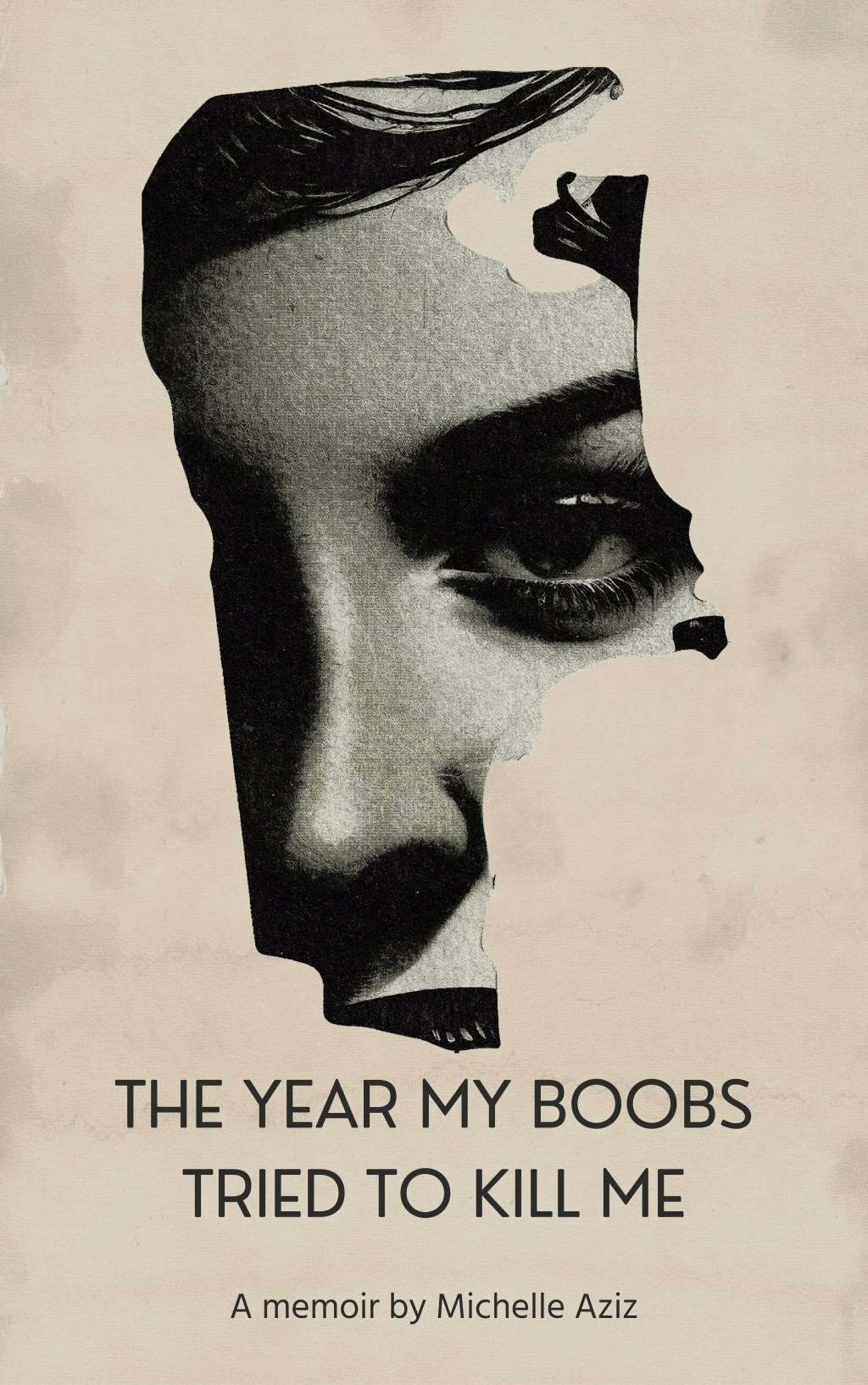
Monday 25 March 2024. The genetic test results.
When the call came that my genetic testing results were ready, I felt a knot form in my stomach that would not unravel, no matter how many deep breaths I took. I had been waiting for this day with equal parts dread and hope, a strange balancing act that only cancer patients understand. On the one hand, I wanted an answer, some kind of reason why this had happened to me. On the other, I feared that an answer might carry implications not only for me, but for my son, my niece, generations to come.
The language of cancer had already become familiar, its acronyms and clinical terms slipping into my vocabulary as though it was the most natural thing in the world. But triple negative breast cancer – the words still hit differently. It wasn’t just another kind of breast cancer. It was a relatively rare form, accounting for only about 15% of cases, a number that sounded small until you realised you were part of it. It was also known as one of the most aggressive variants, notorious for being harder to treat, for spreading fast, for its lack of targeted therapies. When I first heard the phrase from my oncologist, my mind translated it into blunt terms: this one is scary.
So perhaps, in some corner of my mind, I thought the genetic testing might offer me some kind of control. Maybe there was a defective gene lurking in my DNA, a neat little villain I could point to and say: you, you are the reason my life has been thrown off course.
The results, however, were not neat. They rarely are. Instead of a clear yes or no, the tests revealed something called a variant of uncertain significance.
A mutation – but one that science could not yet explain. It might mean something, it might mean nothing. It was a mystery wrapped in the cold language of genetics. Instead of bringing clarity, it opened a door to more questions. Questions no one had answers to. In the same breath, I was advised to consider a full hysterectomy and a mastectomy to improve my chances of survival – removing any remaining “dangerous” female parts that could one day kill me. But even then, they couldn’t guarantee it would work. It was a terrifying notion, one I couldn’t fully comprehend at the time, so soon into my treatment, barely two weeks after my first chemotherapy session.
When I was on the phone with the woman from the genetic testing lab, the words tumbled out before I could stop myself: Could my personality have caused this? I asked her if my Type A nature—the constant need to be in control, the inability to sit still, the way I could never truly relax—had anything to do with my diagnosis. Part of me hoped she would laugh kindly and tell me no, that it was impossible, that I was searching for meaning where there was none. Instead, she paused, her silence stretching across the line, and then said gently that there was no scientific evidence to support that idea. But the question hung in the air long after the call ended, a quiet echo of my fear that somehow my very way of being in the world had turned against me.
And that’s when the self-blame began to creep in.
If the answer wasn’t in my genes, then maybe the answer was in me – in the life I had lived, in the choices I had made. I started turning over the stones of my past, one by one, exposing the dark corners I had managed to ignore until now. The excessive drinking since my early twenties, the late nights, the times I had skipped exercise, the years when stress drove me to convenience food instead of nourishment. Each memory became a piece of evidence in the case I was building against myself.
I began scrolling through old photos, a punishment and a comfort all at once. There I was ten years ago, glowing with youth, my skin taut with health, eyes sparkling, hair long and glossy. Vibrant, carefree, untouchable. And here I was now – scarred, tired, poisoned by chemotherapy, stripped bare by illness. I looked at those photos and wanted to weep, not only for the young woman I once was but for how recklessly I had squandered her vitality.
I whispered to myself in the mirror: You did this. You brought this on yourself.
And once that door cracked open, the darker thoughts slipped through with ease.
I began to think about death – not in an abstract, philosophical way, but as a very real, very near presence. Death wasn’t a distant possibility reserved for the elderly anymore. It was here, in the room with me, leaning in close, watching me breathe. And in those moments, I wasn’t afraid of dying itself. I wasn’t even afraid of the suffering. What pierced me, what hollowed me out, was the thought of leaving my husband and my son.
I pictured my son, only ten years old, growing up without a mother. I pictured birthdays and graduations and ordinary Sunday mornings, all the milestones and the small, precious nothings that I would never see. The guilt was suffocating. It pressed against my ribs, stole the air from my lungs. It wasn’t just that I might die – it was that I might abandon them. The pain of that thought was almost unbearable. It clawed at my chest, heavier than any physical side effect of the disease. And in my weakest moments, I believed it was my fault. That I had been selfish, careless, blind to the fragile gift of my own health.
But somewhere, beneath all that noise, a quieter truth began to take shape. I realised that guilt and shame, left unchecked, would devour me faster than the cancer ever could. They were insidious poisons, feeding off my regrets, blinding me to any chance of healing. And if I was to have any hope of surviving – not just physically, but emotionally, spiritually – I needed an antidote. The antidote, I discovered, was forgiveness.
I needed to forgive myself. Not in a grand, sweeping declaration, but in the small, deliberate act of releasing each burden I had been carrying. I forgave the young woman who had believed she was invincible, who thought death was for other people, older people, far away in the distance. I forgave the woman who worked too much, drank too much, skipped the gym, ate takeaway when she should have cooked. I forgave myself for living the only way I knew how at the time, with the knowledge and resources I had then.
I began to see that blaming myself for cancer was as futile as blaming myself for a storm, or an earthquake. It was not something I had invited, no matter how many times I replayed my past choices. Cancer simply came, uninvited and merciless, and no amount of guilt could explain it away.
As I sat with this realisation, a shift happened. Death was still near – I could almost feel it, like a shadow at my shoulder – but I was no longer terrified. I accepted it. Not in defeat, but in surrender to the truth that death is part of life. I made peace with it, as strange as that sounds.
So, I made a decision. I would not let fear hold me hostage. I would not waste another moment searching for blame in my DNA, or in the choices of my past. The variant of uncertain significance would remain what it was – uncertain. A riddle for scientists to solve one day, maybe long after I was gone. It wasn’t my burden to carry anymore. I gave my permission for my DNA to be stored and used for future research; truly believing that one day we will find a cure.
What mattered was now. What mattered was the next year of my life, the treatments ahead, the moments I could still create with my family. The only power I had was in my mind – how I chose to frame this experience, how strong I could make my spirit even as my body weakened.
I let go of the obsession with why. I may never know why I got cancer, and perhaps no one ever will. But I decided that not knowing could also be a kind of freedom. I didn’t need to waste any more time digging through the rubble of my past for answers that weren’t there. I needed to turn toward the future, toward survival, toward presence.
And so, I whispered to myself again, this time not with blame, but with resolve: You can do this. You will do this. Not for certainty, not for guarantees – but for love.


 healing through words
Leave a reply to Saheba Ansari Cancel reply